
Flat Roof Surveys
Flat Roof Surveys
Flat roofs require maintenance and regular inspections if they are to remain effective over the long term.
This isn’t as difficult or onerous as you might expect, as long as safe access is available to carry out an inspection.
A visual assessment of the roof covering, whether it be felt, asphalt, single-ply or a waterproofing system, is generally sufficient.
At the same time the roof is examined, all flashing & edge details, drainage and guttering systems should be examined to make sure that any exposed materials remain in serviceable condition and that everything is working as it should do.
In terms of maintenance, any debris, soiling and weed growth should be removed to ensure that nothing can interfere with the roof covering and that water can escape freely from the roof.
Remember that soiling and weed growth becomes far heavier when wet and that standing water can have a detrimental effect on felts, single-ply systems and coatings.
Sometimes, particularly with larger premises or for property portfolios, it is often worth considering a maintenance agreement that include bi-annual inspections and routine maintenance, since this can help to prolong the life of a roof.
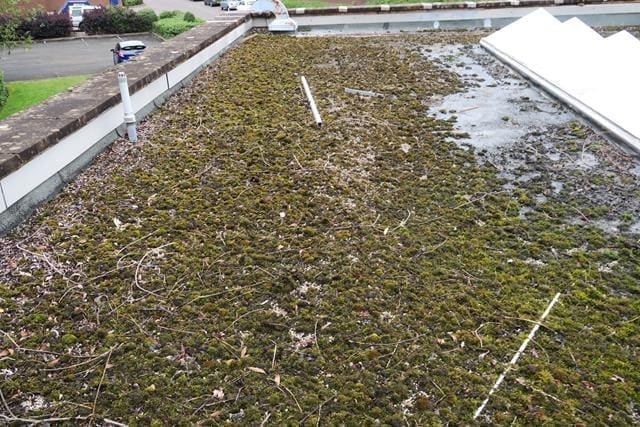
TYPICAL FLAT ROOF SURVEY FINDINGS
Felt Flat Roof Survey
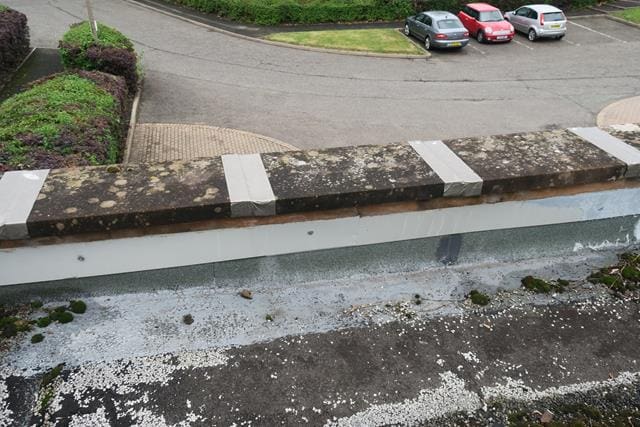
Poor quality flashband repairs to copings plus inconsistent coating repair over the felt covering.
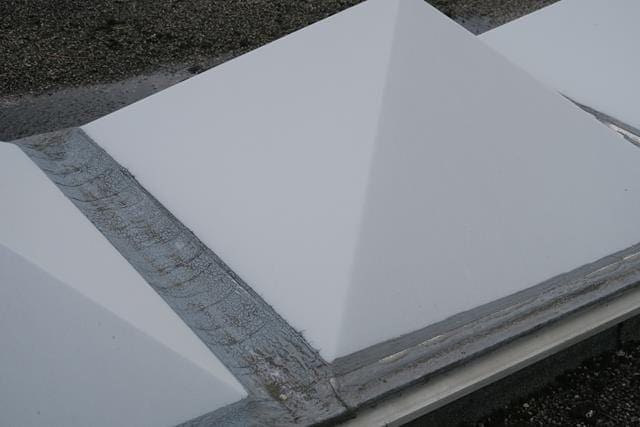
Trapezoidal roof lights with temporary repair consisting of roofing tape and unsuitable coated finish.
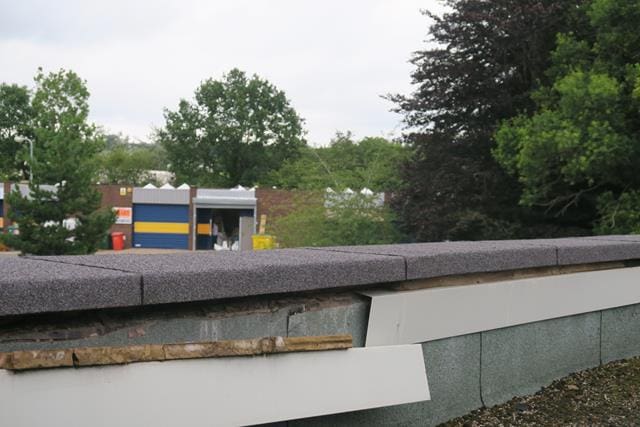
Failing mortar joints, with loose & dislodged metal flashings and debonding felt to upstand.
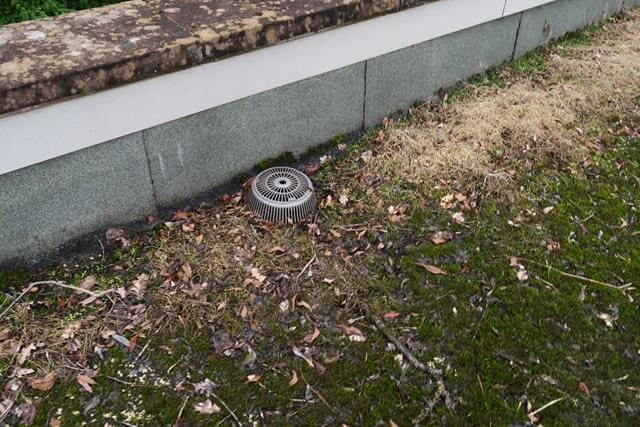
Accumulation of moss and debris, restricting drainage outlet with evidence of historical ponding water.
Asphalt Flat Roof Survey

Roofing tape applied as patch repair to cracked and crazing asphalt roof.
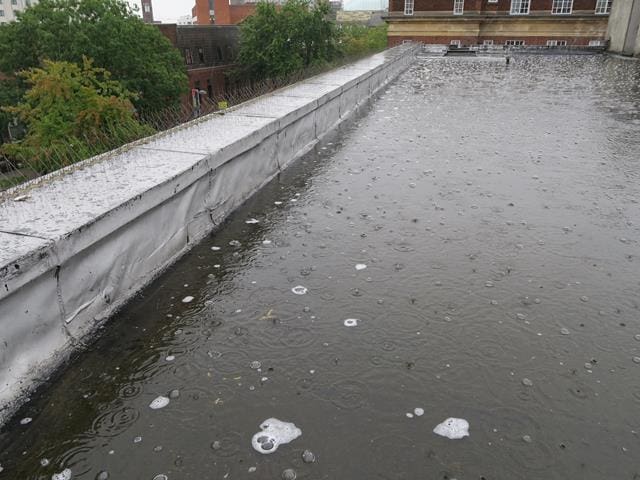
Insufficient or blocked drainage to release water quickly from asphalt roof.
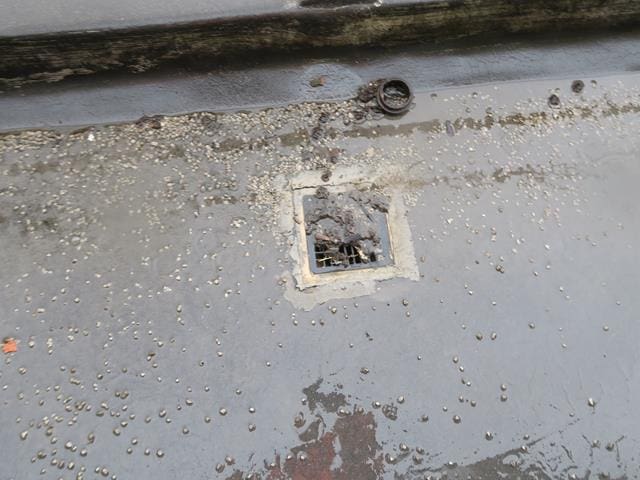
Blocked gulley restricting water flow to balcony drain.
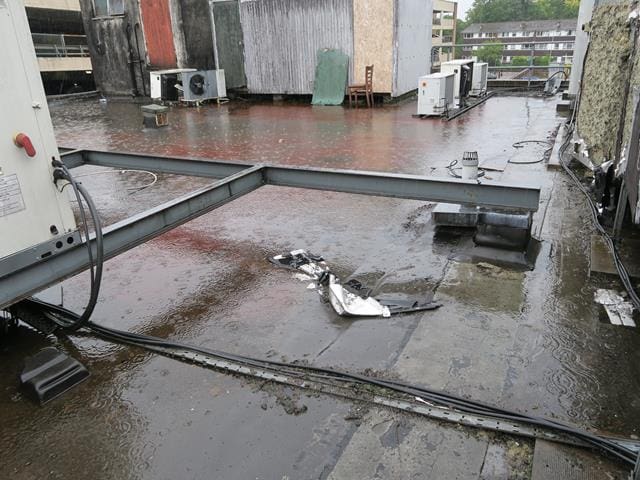
Debris, soiling and misplaced electrical wiring to air handling equipment on asphalt roof.
Single Ply Flat Roof Survey
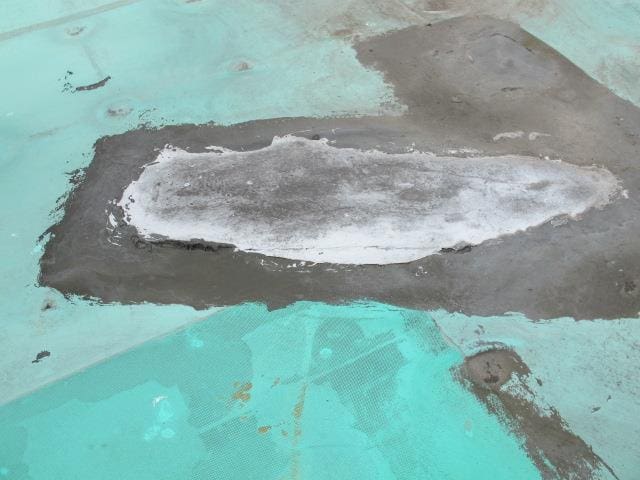
Failed poor quality, bitumen based repair to single ply roof covering.
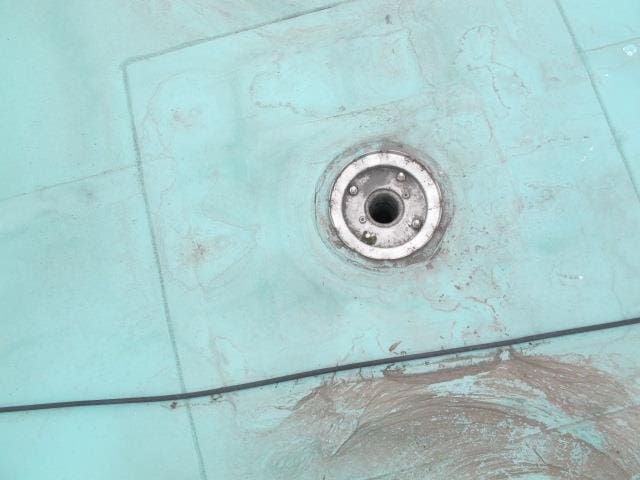
Missing baffle to siphonic drainage outlet can cause inefficient water flow.
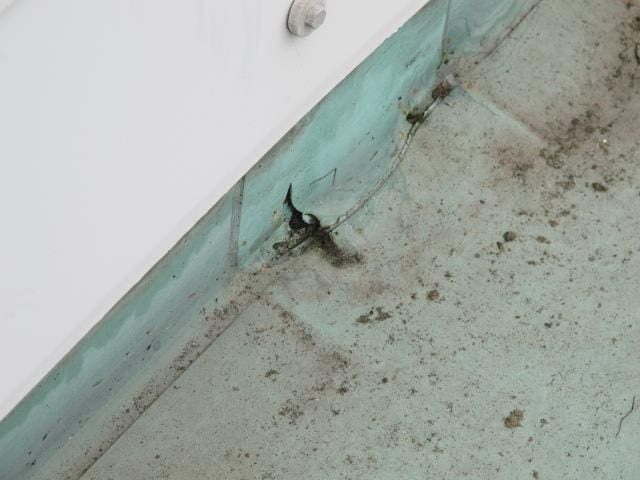
Split to single ply roof covering at the upstand. A source of water ingress.
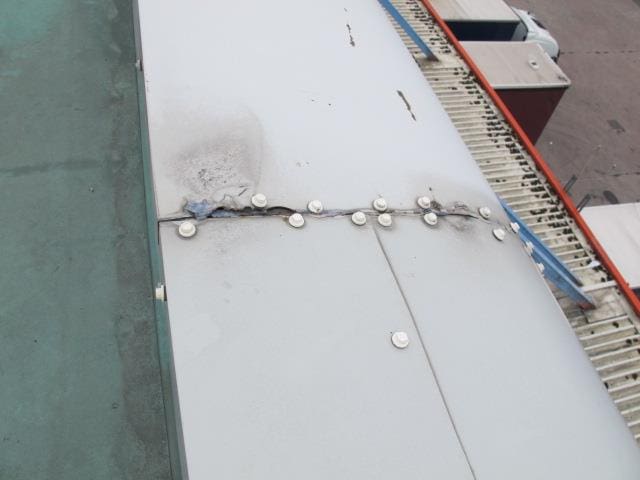
Poor quality edge capping detail with failing coated & fixing repair.
Flat Roof Core Testing
REASONS FOR FLAT ROOF CORE TESTING
Once water has found its way beneath a flat roof covering, it can cause considerable damage to the roof deck and any insulation that is present.
Core testing is carried out to determine whether and to what extent, such damage has occurred.
Core testing also allows us to see how the roof is built up and how many different layers of roof covering are present.
Core testing is a destructive testing procedure that involves cutting away the roof covering to expose and examine the layers beneath.
If solid insulation board is present, a section will be cut out so that the roof deck can be exposed and examined. Sometimes, more than one layer of insulation will be present.
Measurements are taken of the insulation to ensure it complies with current building regulations and the deck is examined for signs of ponding water and other damage.
The insulation is put back into its original position and the roof covering is then temporarily patch-repaired to prevent water ingress through the sample area.
We do not usually conduct any hot works, so the reinstatement of the roof covering will involve the placement of self-adhesive felt or roofing tape, which is then sealed with a bitumen spray, reinforced coating or a silicone compound, whichever is most appropriate.
Because of the destructive nature of the core testing, we do not recommend it is undertaken unless you are considering replacing or upgrading the existing roof covering.
MATERIAL IDENTIFICATION
Material identification doesn’t only relate to the roof covering. A core sample will help determine the number and composition of the various layers, including any recovery boards, vapour barrier, thermal insulation and more.
ROOF SLOPE IDENTIFICATION
By examining the roof in different areas of the roof, it is possible to see how the slope of the roof has been achieved, whether it be with tapered insulation, poured-in materials such as concretes and screeds.
DIAGNOSTIC INSPECTION
Most core sampling flat roof surveys are conducted to determine why a particular defect is present on a roof. Such defects can be water ingress, loss of adhesion of the roof covering, verifying the presence and location of wet components and more.
HAZARDOUS MATERIALS
Asbestos is commonly present in older roof felts, bitumen based products and certain insulation products which could have been covered and hidden with more recent overlays. Our surveyors take samples and test for asbestos presence.

The roof membrane is cut away to reveal the substrate

The substrate in this case appears to be asphalt

The asphalt is broken away to expose the insulation layer

The insulation layer is measured and checked
Arrange A Flat Roof Survey
To arrange a flat roof survey with core testing, please call us on 07737 875199.
Please note that our surveys are restricted to commercial and industrial premises only, since we are no insured for domestic work.
No hot works are carried out. After exposing a roof in this way, a temporary repair using specialist waterproofing tape will be carried out. Please bear in mind that unless you are planning to carry out roof remedial works within 3 months, we do not recommend core testing.